
Sage Lang · 9 October 2026
Mapping Global Distribution Networks for Innovative Mint and Grape Combination Goods in Retail Settings
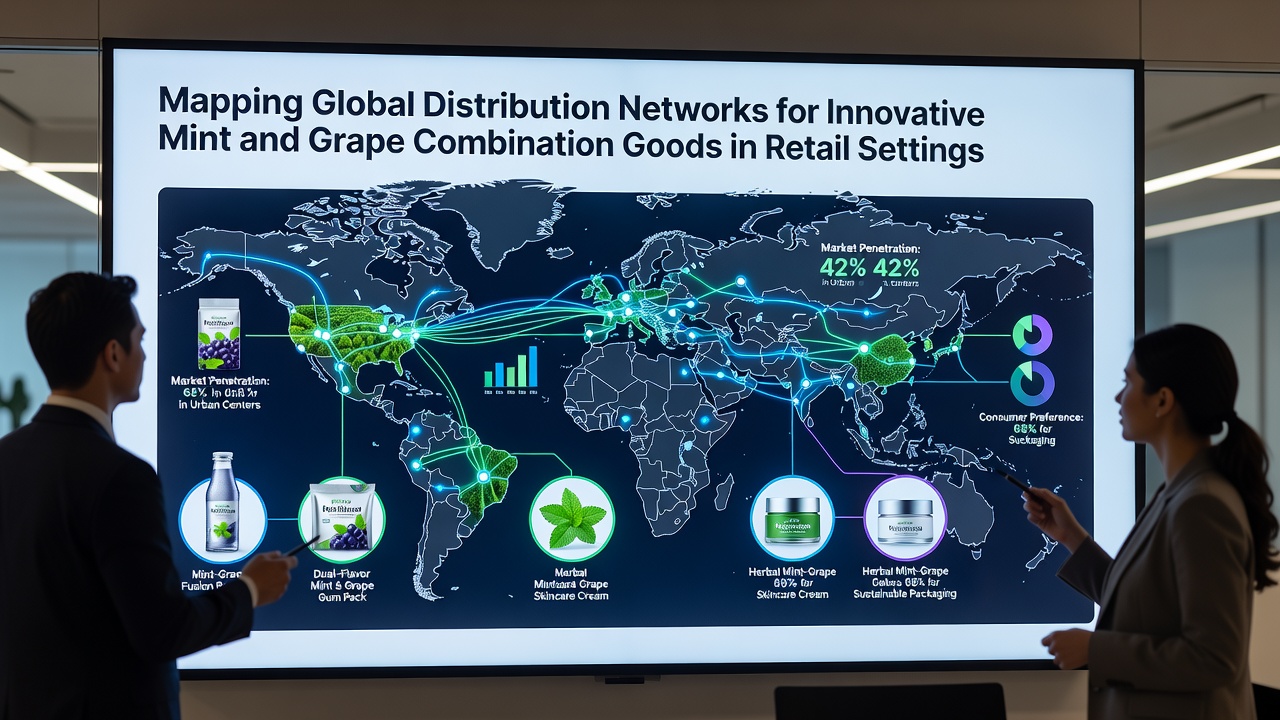
Retail sectors worldwide have expanded their handling of mint and grape combination goods through coordinated supply chains that connect agricultural sources in multiple continents with urban and suburban stores. These products often include flavored beverages, confectionery items, and packaged snacks that blend cooling mint notes with sweet grape profiles. Distribution networks rely on temperature-controlled logistics, regional warehousing hubs, and data-driven inventory systems to maintain product freshness from origin to shelf.
Key Components of Distribution Infrastructure
Supply routes for these goods typically begin in grape-growing regions such as parts of South America and California while mint cultivation draws from Mediterranean climates and North American farms. Once harvested, raw materials move through processing facilities where flavor combinations are developed under controlled conditions. From there, finished goods travel via ocean freight or air cargo depending on shelf life requirements, then enter national distribution centers that serve retail chains and independent outlets. Observers note that synchronization between these stages reduces spoilage rates and supports consistent availability in stores.
Data from industry tracking services shows that major retailers in North America and Europe have integrated blockchain tools to trace batches of mint-grape products back to their processing points. This visibility helps address regulatory standards on labeling and ingredient sourcing. In October 2026, several trade corridors implemented updated digital customs procedures that speed up clearance for perishable flavor-infused items, allowing quicker restocking in high-volume locations.
Regional Variations in Network Design
Asian markets often route these combination goods through centralized ports in Singapore and Shanghai before moving inland via rail and truck fleets. Australian distributors have adopted similar patterns, drawing from local grape harvests and imported mint extracts to create region-specific blends that meet consumer preferences in urban centers. European networks emphasize cross-border trucking between member states, supported by unified safety protocols that cover both fresh and processed variants of the products.
Researchers at institutions in Canada have documented how cold chain partnerships between growers and retailers lower waste during transit over long distances. One study highlighted cases where temperature monitoring sensors reduced losses by significant margins in shipments heading to retail outlets across provinces. Meanwhile, Latin American exporters focus on direct links to North American supermarket groups, using seasonal peaks in grape production to align with demand spikes for the combined flavor profiles.
Technology Integration and Inventory Management
Modern distribution systems incorporate predictive analytics that forecast retail demand based on historical sales patterns and seasonal factors. These tools allow warehouses to adjust stock levels of mint and grape items ahead of promotional periods or weather-related consumption shifts. Retailers in multiple countries now share real-time point-of-sale data with suppliers, creating feedback loops that refine production schedules and transport planning.
What's notable is the role of specialized packaging that extends product stability during extended shipping times. Materials designed to block light and control humidity have become standard in these networks, particularly for items crossing equatorial routes. According to reports from the Australian Department of Agriculture, Fisheries and Forestry, such innovations support reliable delivery to distant retail destinations without compromising quality.
Challenges in Scaling Networks
Fluctuations in raw material costs and transportation fuel prices continue to influence how companies structure their global flows. Retailers respond by diversifying supplier bases across hemispheres to balance seasonal availability of mint and grapes. Regulatory differences between countries require detailed compliance documentation that accompanies each shipment, adding layers to the logistics process but ensuring consistent market access.
One documented example involves a European retail group that expanded its mint-grape beverage lines by establishing secondary distribution points in Eastern Europe. This adjustment shortened delivery times to smaller stores while maintaining volume efficiency for larger urban locations. Similar adaptations appear in reports from the Canadian Retail Council, where collaborative planning between distributors and retailers has streamlined restocking cycles for flavored goods.
Conclusion
Global distribution networks for mint and grape combination goods in retail settings continue to evolve through technology adoption, regional partnerships, and infrastructure refinements. These systems connect cultivation areas with processing sites and final retail points using coordinated transport and inventory methods. Information from sources such as the Food and Agriculture Organization of the United Nations and academic analyses in Canada illustrates how these networks maintain product integrity across borders while meeting varying regulatory and consumer requirements. As trade procedures advance in regions including those updated in October 2026, the mapping of these routes supports ongoing expansion of flavored retail offerings.